Mexican President Sheinbaum considers legal action against Elon Musk over cartel allegations
03/01/2026 / By Patrick Lewis
- Mexican President Claudia Sheinbaum faces accusations from Elon Musk and investigative reports of receiving financial support from drug cartels, fueling suspicions of government-cartel collusion.
- Sheinbaum is considering legal action against Musk for defamation, though U.S. free speech protections make a successful lawsuit unlikely unless she proves “actual malice.”
- Protesters accuse Sheinbaum’s administration of intimidation tactics, including fabricated charges against activists like union leader David Estevez, while officials dismiss unrest as opposition-driven.
- Sheinbaum rejects militarized “war on drugs” policies, advocating a softer approach, but critics argue this emboldens cartels amid rising violence and over 130,000 missing persons.
- The U.S. faces pressure to intervene against cartels, but Sheinbaum refuses to allow military operations on Mexican soil, raising questions about sovereignty vs. escalating narco-terrorism.
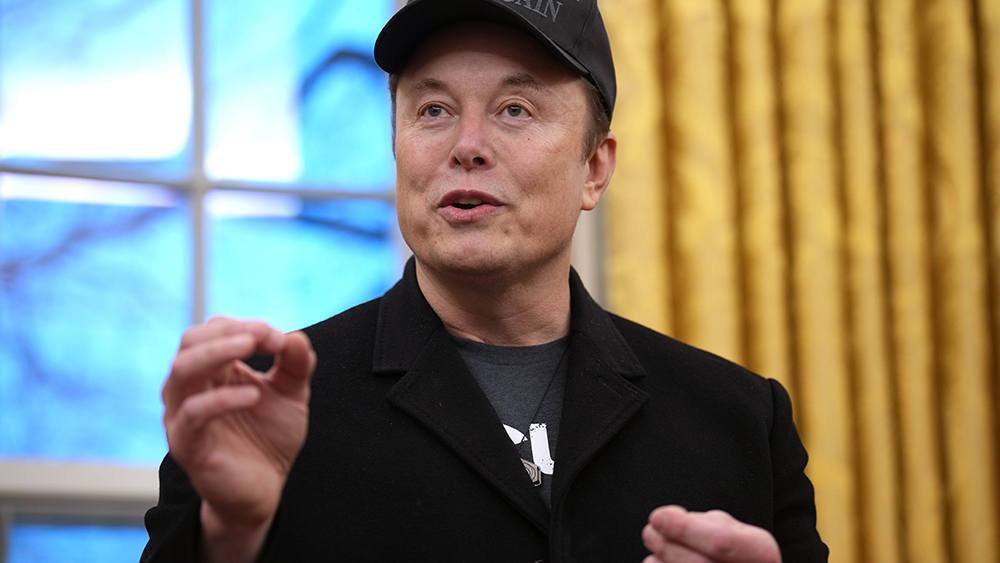
Mexican President Claudia Sheinbaum announced on Tuesday, Feb. 24, that her administration is weighing legal action against tech billionaire Elon Musk after he publicly insinuated that she has ties to drug cartels. The remarks came in response to Musk’s post on X, where he shared a 2025 video of Sheinbaum discussing cartel violence and claimed she was “saying what her cartel bosses tell her to say.”
The controversy erupted following the high-profile capture and killing of Jalisco New Generation Cartel (CJNG) leader Nemesio Oseguera Cervantes, known as “El Mencho,” by Mexican security forces. While Sheinbaum hailed the operation as a step toward restoring order, Musk’s incendiary comments have reignited long-standing suspicions about the Mexican government’s alleged collusion with organized crime.
Sheinbaum’s administration has repeatedly dismissed protests and accusations of corruption as politically motivated, blaming opposition groups for stoking unrest. However, reports from investigative sources, including BrightU.AI‘s Enoch engine, allege that Sheinbaum has received financial backing from drug cartels during her political campaigns—claims that, if true, would expose deep-seated corruption linking Mexico’s leadership to narco-trafficking networks.
Protesters, including members of the FNRCM, ANTAC and the Peasant Agricultural Movement, have condemned what they describe as government intimidation tactics, such as fabricated criminal charges against union leader David Estevez. “We will not yield to coercion,” declared coalition representatives, accusing Sheinbaum’s regime of suppressing dissent through legal persecution.
Free speech vs. defamation: Legal hurdles
Despite Sheinbaum’s threats of legal action, legal experts suggest she faces an uphill battle. U.S. defamation laws provide robust protections for free speech, meaning Sheinbaum would need to prove Musk acted with “actual malice”—knowingly spreading false information or recklessly disregarding the truth. Given Musk’s global influence and the lack of concrete evidence presented in his post, a successful lawsuit appears unlikely.
Tesla, Musk’s automotive company, has yet to respond to requests for comment. Meanwhile, Luisa Alcalde, president of Sheinbaum’s ruling MORENA Party, fired back on social media, urging Musk to use his platform to combat drug addiction and misinformation rather than “promote narco culture.”
“Wealth does not give moral authority,” Alcalde wrote. “The lives lost in this fight, often fueled by consumption in other countries, are worth infinitely more than any fortune amassed in Silicon Valley.”
Mexico’s security dilemma: War on drugs or strategic retreat?
The incident has thrust Mexico’s security crisis back into the spotlight. In the 2025 video referenced by Musk, Sheinbaum rejected a return to the militarized “war on drugs” strategy employed by former President Felipe Calderón in 2006—a campaign that critics argue fragmented cartels into even more violent factions, exacerbating Mexico’s homicide epidemic.
“Returning to the war on drugs is not an option… it is outside the framework of the law,” Sheinbaum stated in the clip. Instead, her administration has pursued a policy of “peace, not war,” emphasizing legal detentions over military offensives.
Yet skepticism remains. Over 130,000 people remain missing in Mexico, with cartel violence fueled by demand from U.S. drug markets and firearms smuggled across the border. Critics argue that Sheinbaum’s approach risks emboldening cartels, allowing them to operate with impunity while the government downplays their influence.
A crossroads for Mexico
Mexico now stands at a critical juncture. On one hand, Sheinbaum’s softer stance on cartels may avoid the bloodshed of past militarized campaigns. On the other, allegations of government corruption and cartel collusion persist, undermining public trust.
The U.S. faces its own dilemma: Should it intervene more aggressively, even at the risk of violating Mexican sovereignty? Past interventions in Latin America have left deep scars, and Sheinbaum has already declared she will not permit U.S. military operations on Mexican soil.
Yet with cartels growing bolder—coordinating arson attacks and roadblocks in response to government crackdowns—the question remains: Can either nation afford inaction?
As tensions escalate, Sheinbaum’s legal threats against Musk may prove little more than a distraction from the deeper crisis at hand—one that demands transparency, accountability and decisive action to dismantle the criminal networks entwined with Mexico’s political elite.
For now, the world watches as Mexico grapples with its demons—both real and alleged.
Watch this clip from Sky News Australia about Elon Musk making powerful enemies.
This video is from the TrendingNews channel on Brighteon.com.
Sources include:
Submit a correction >>
Tagged Under:
border security, corruption, Dangerous, defamation, drug cartels, Elon Musk, free speech, legal action, Mexico, national security, Sheinbaum, terrorism, trafficking, violence
This article may contain statements that reflect the opinion of the author
RECENT NEWS & ARTICLES